
Nimble, quiet skiffs
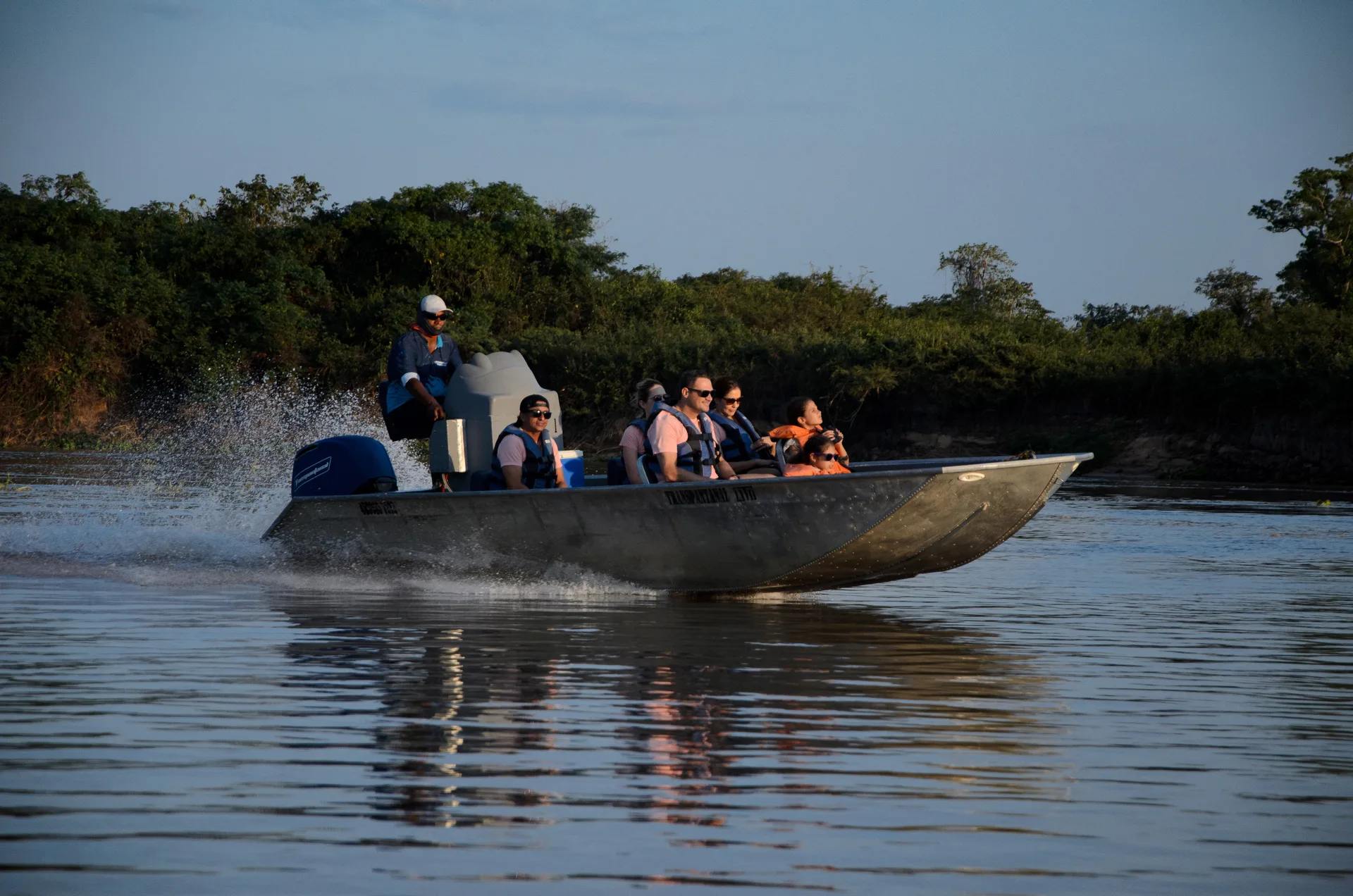
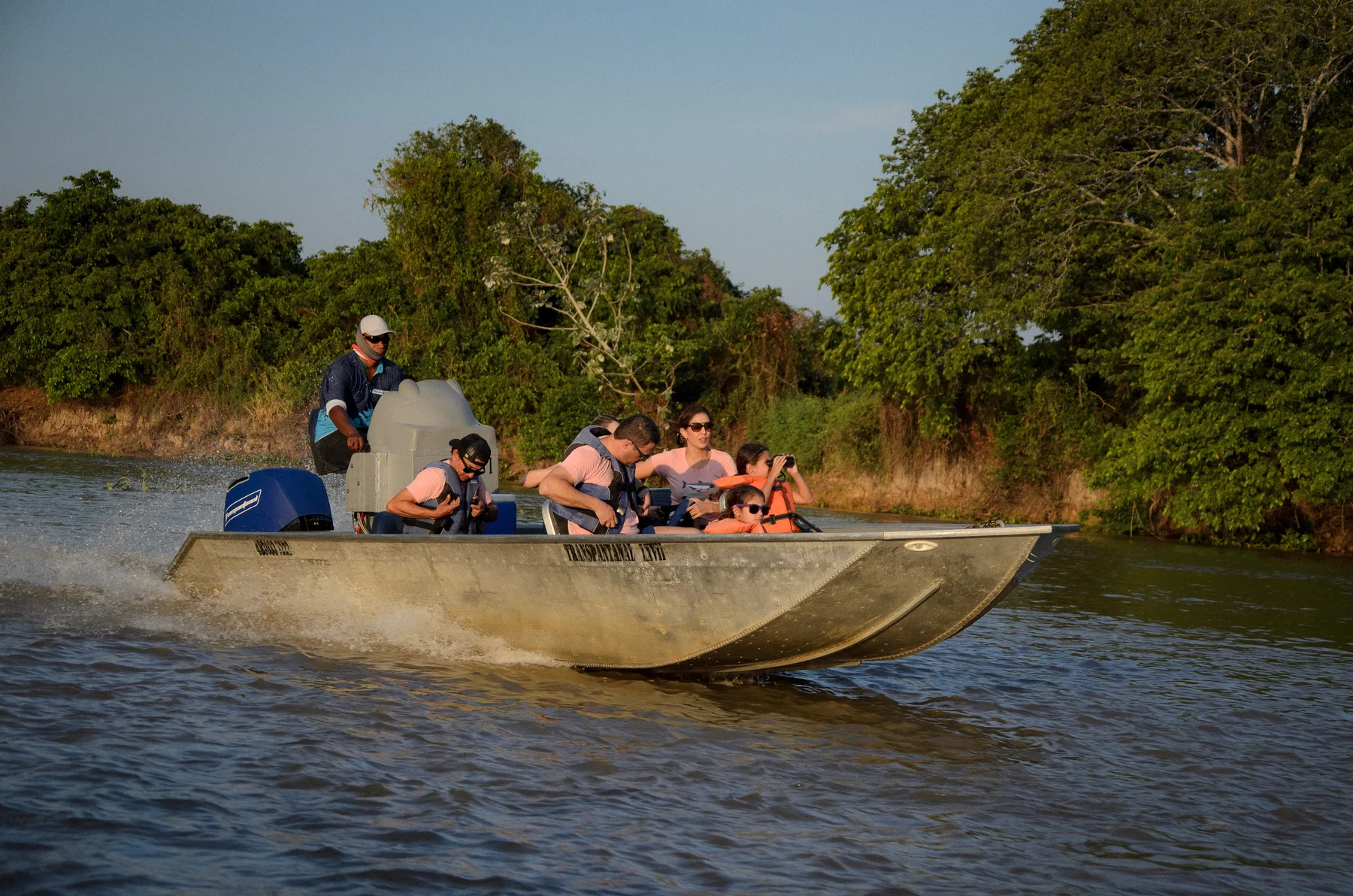
Shallow-draft aluminium boats slip into the low channels and ease up to the banks without startling the wildlife.
Ecotourism
Here the trip happens on the water. You drift slowly along the rivers and channels, and the wildlife appears on the banks, in its own time.
What our ecotourism is
No rushed trails. Transpantanal ecotourism sets off from the vessels and steps down into the skiffs, which glide along the Piquiri and São Lourenço rivers at eye level with the wildlife.
The boat quiets its motor and approaches with care. From the rail you see the jaguar resting in the shade, the capybara on the bank, the caiman still in the sun and the birds crossing the water just metres away.
Every outing is planned with the boatman, who reads the river and knows where the animals tend to show at the first and last hours of the day, when the light turns golden and the forest wakes.
The experience aboard
Everything is built so you get close without interfering. Silence and patience are part of the trip.
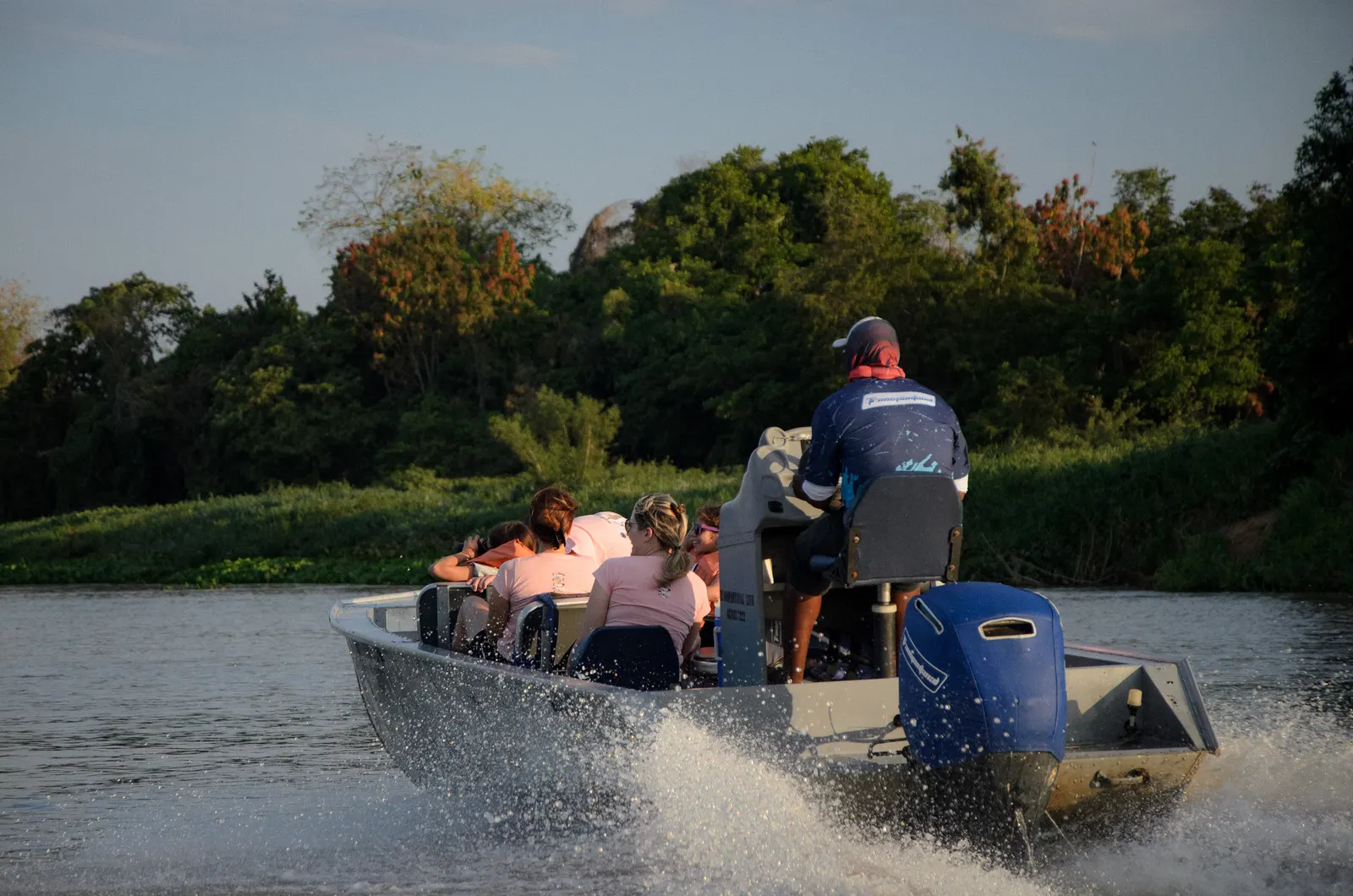
Shallow-draft aluminium boats slip into the low channels and ease up to the banks without startling the wildlife.
Those at the helm were born in the Pantanal, they read the signs of the forest and know where the jaguar rests and the otter fishes.
Outings follow dawn and late afternoon, when the animals come down to the water and the light favours the photographs.
Few people per skiff, so everyone shares the same view, the same silence and the same camera angle.
A day's itinerary
A day of ecotourism follows the animals' clock, not ours. This is the shape of a typical outing.
Dawn
The river is still a mirror and mist rises off the water. The skiffs leave in silence, coffee in the flask and binoculars at the ready.
Morning
We slip into the narrow arms of the river. The banks teem with birds, and it is the hour the jaguar tends to show in the shade.
Midday
A calm bay to cut the motor and simply listen. Caimans in the sun, capybaras on the grass and the darting of kingfishers.
Dusk
The light turns to gold over the water. On the way back come the last sightings, with the Pantanal sky ablaze.
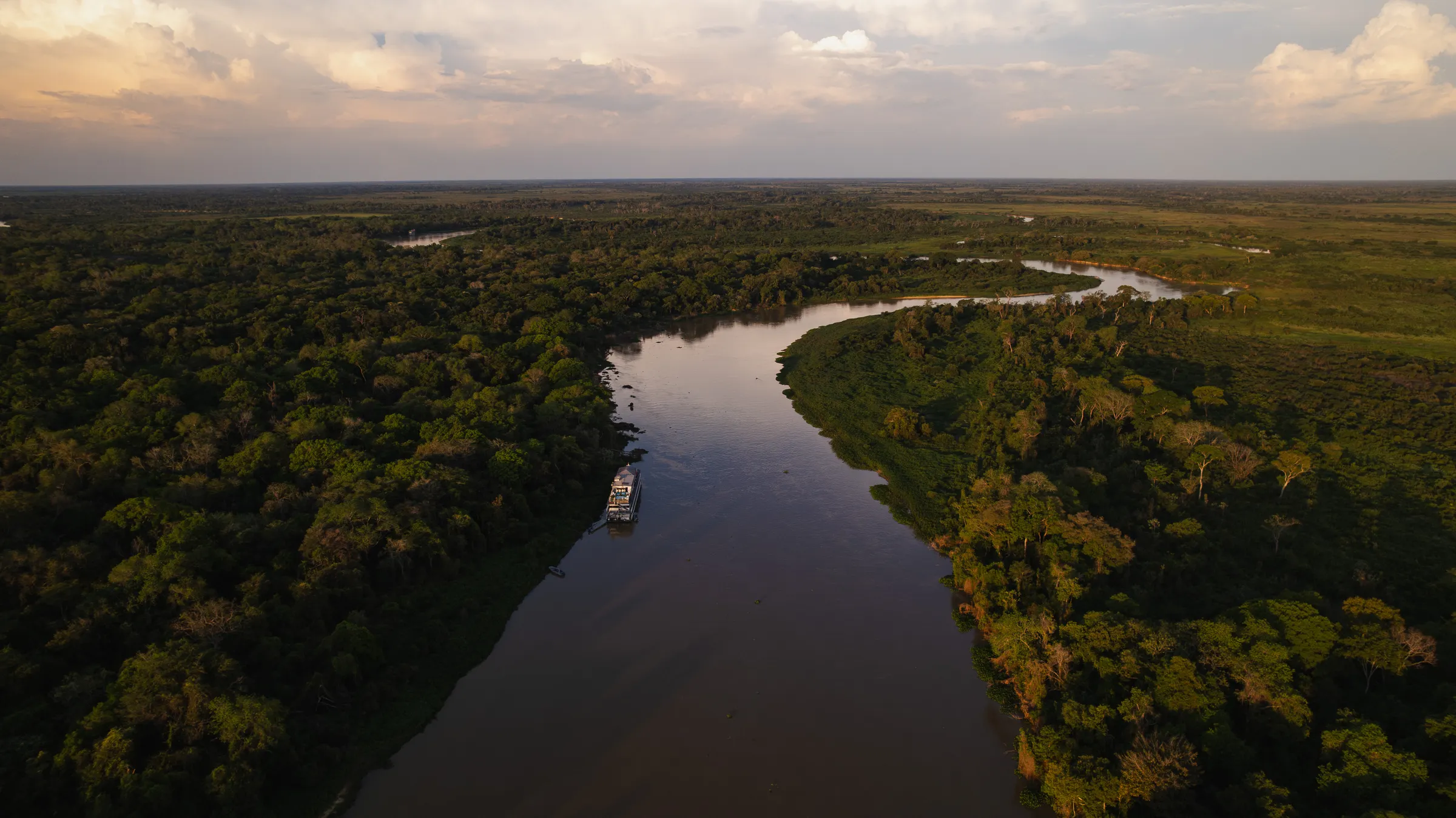
Here, it is the river that moves. We only follow.
What you'll see
Nothing is fenced or fed. These are free animals, spotted from the skiff, and every encounter is a surprise.
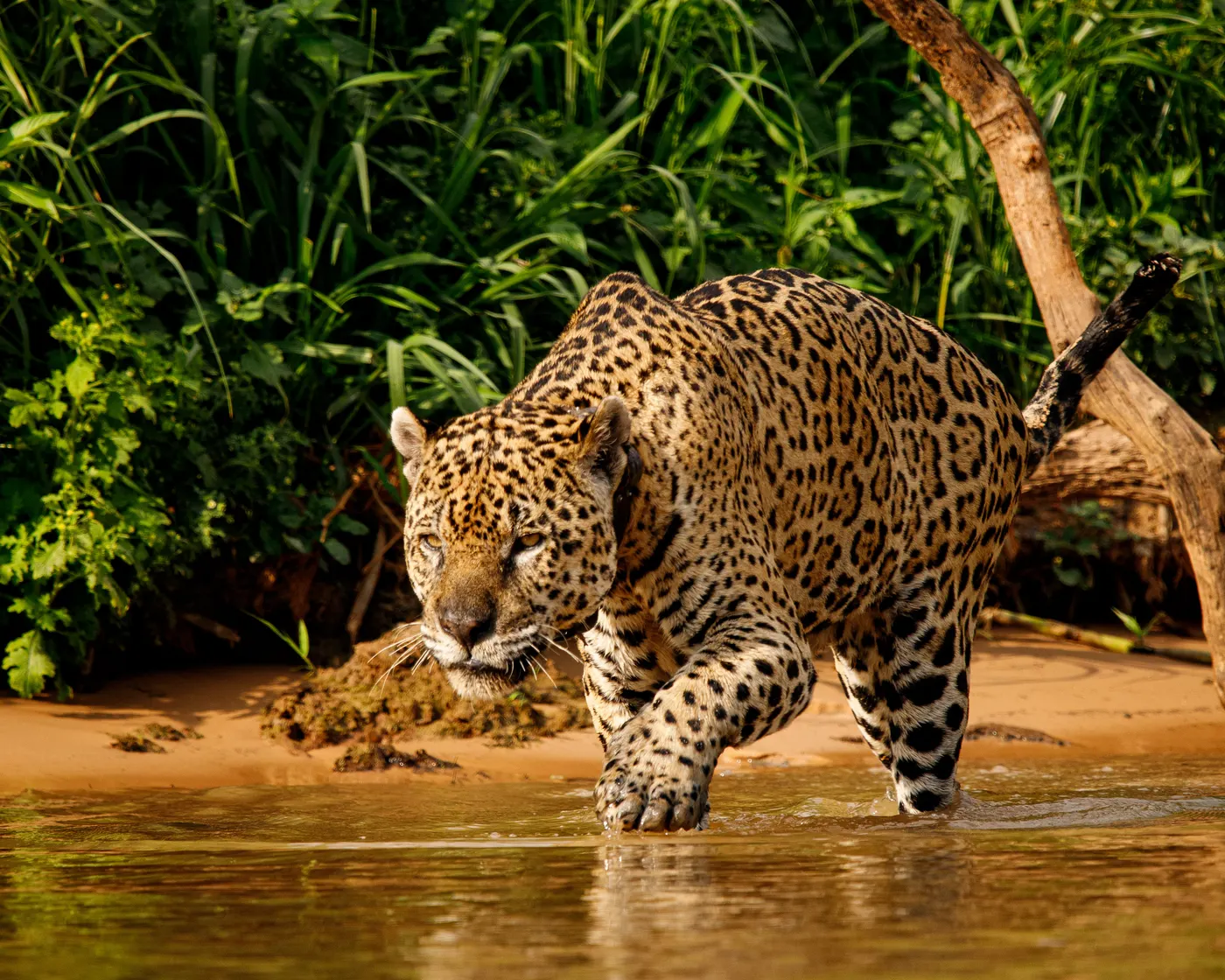 Spotted from the boat
The largest cat in the Americas, which in the Pantanal hunts and rests along the riverbanks.
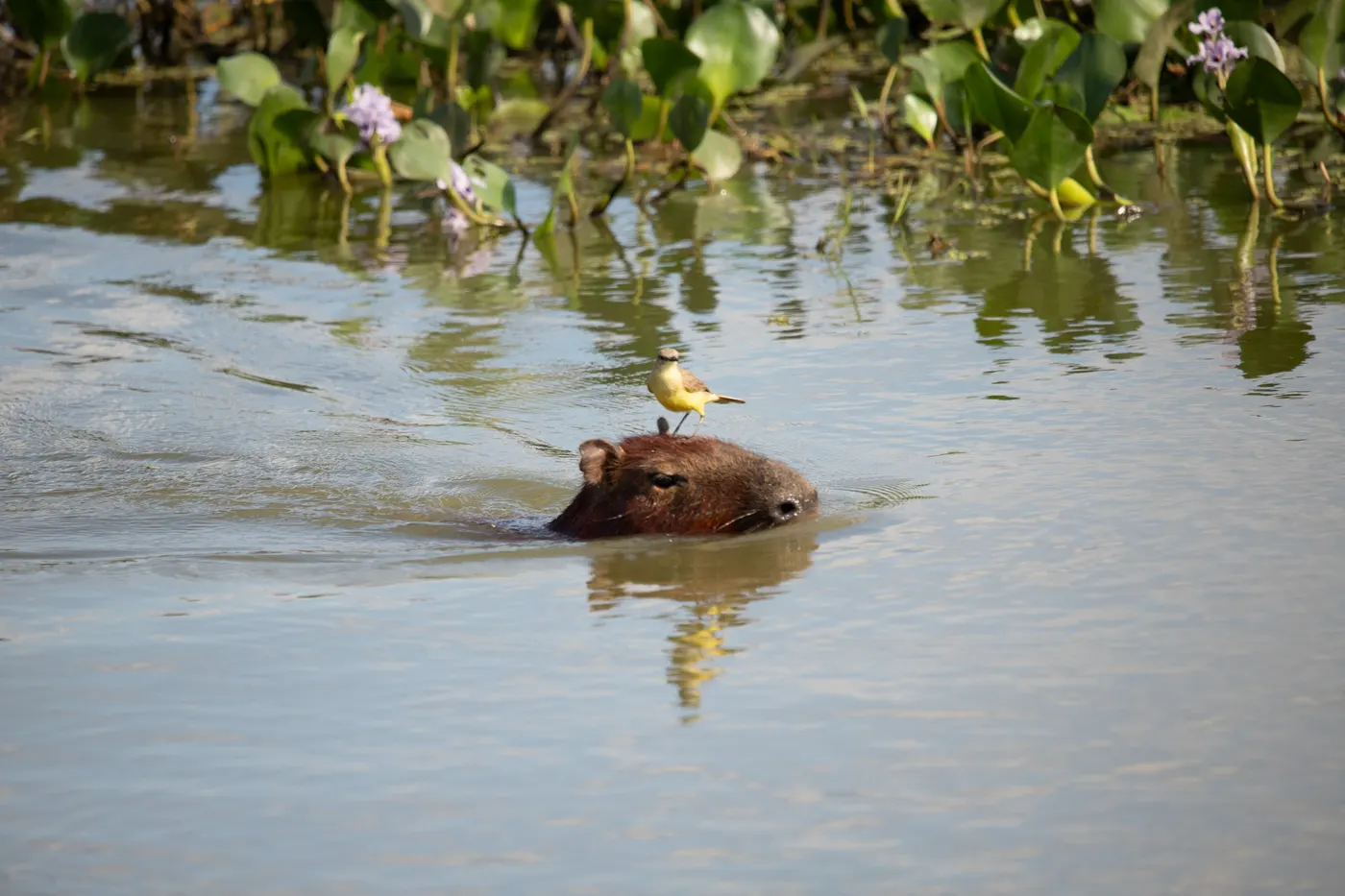 Spotted from the boat
The world's largest rodent, almost always in groups, grazing and swimming by the bank.
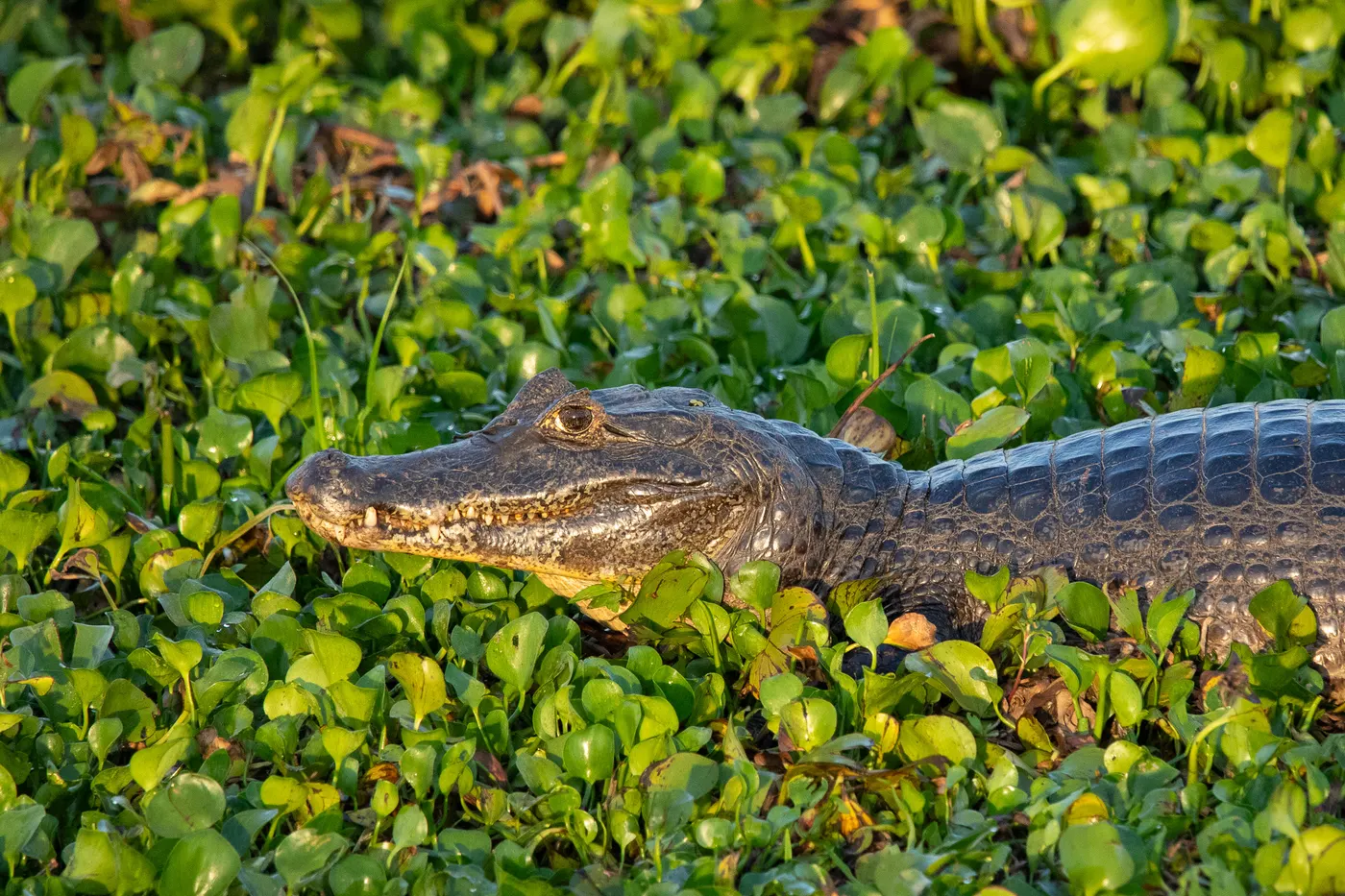 Spotted from the boat
In their thousands across the bays, motionless in the sun, one of the biome's most striking sights.
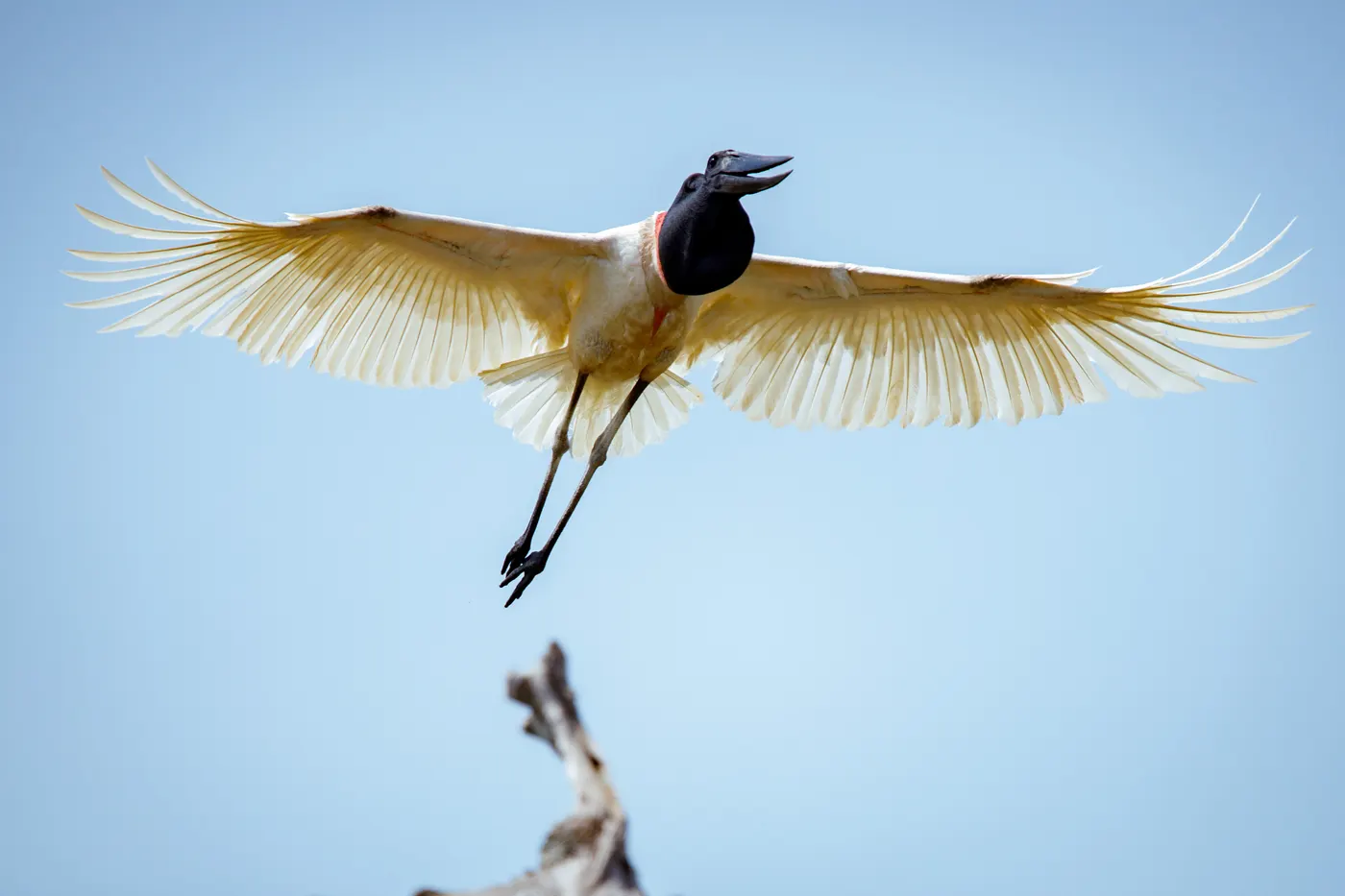 Spotted from the boat
The Pantanal's emblem bird, nearly three metres of wingspan in flight.
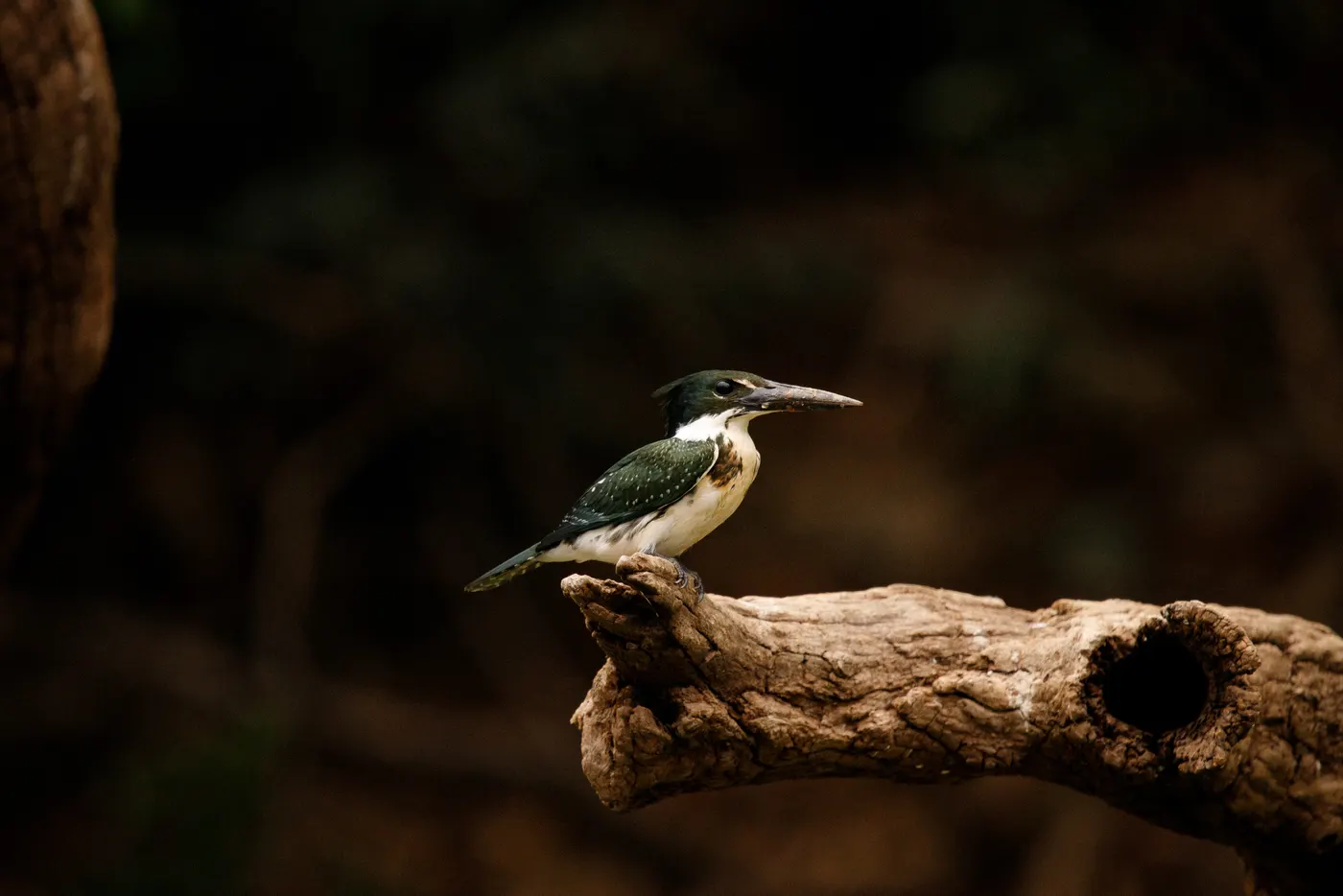 Spotted from the boat
A flash of blue and rust that dives from the branch straight into the water.
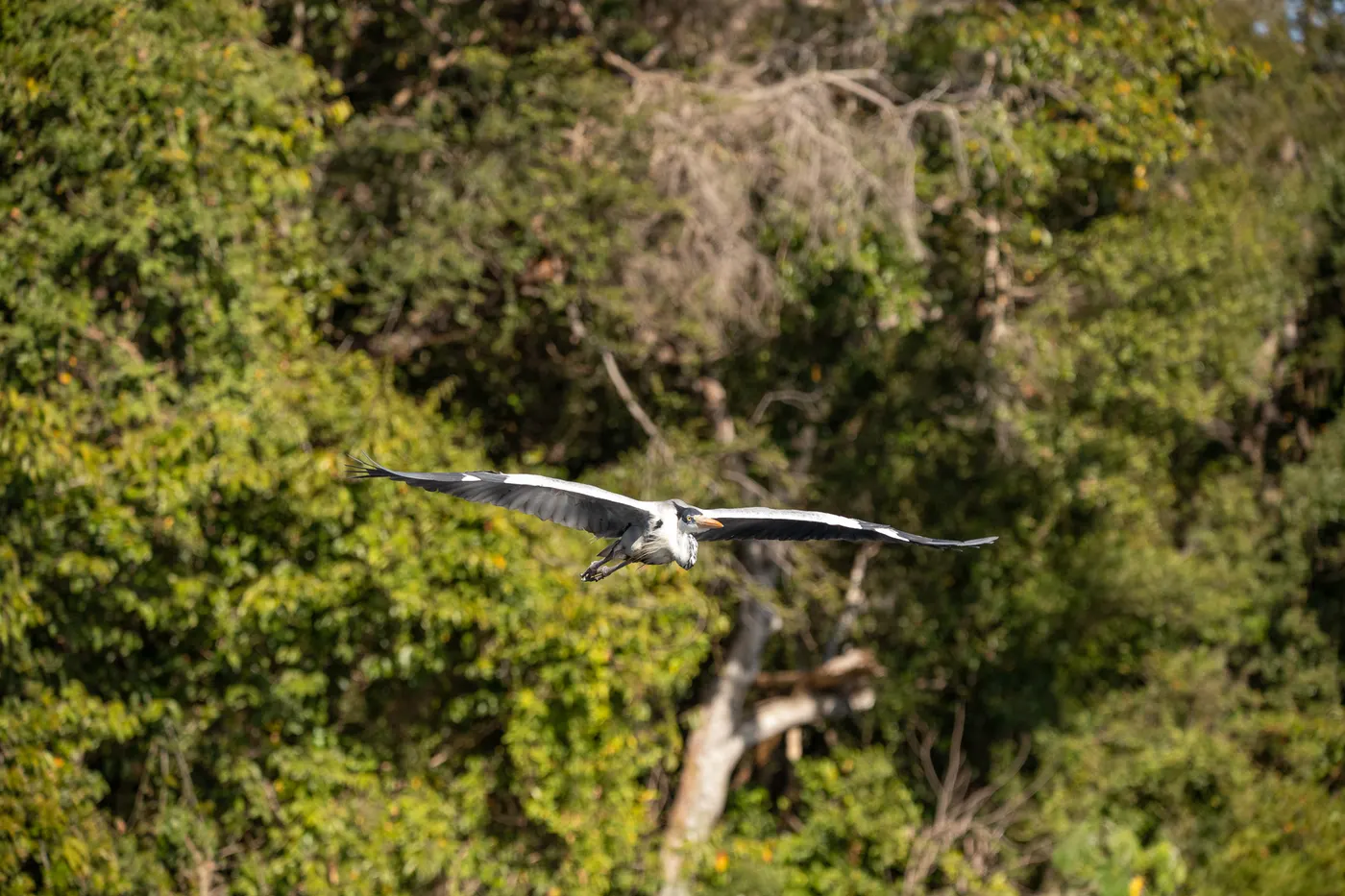 Spotted from the boat
Flocks that fish the shallow banks and take flight as the skiff passes.
Tell us when you'd like to come and our team will build a tailor-made ecotourism itinerary, with outings at the best hours to spot the wildlife. Just reach out on WhatsApp.