
Rising water
November to January
Rain from the highlands arrives, the river climbs and the plain begins to fill. The forest greens over and the birds start nesting.
The biome
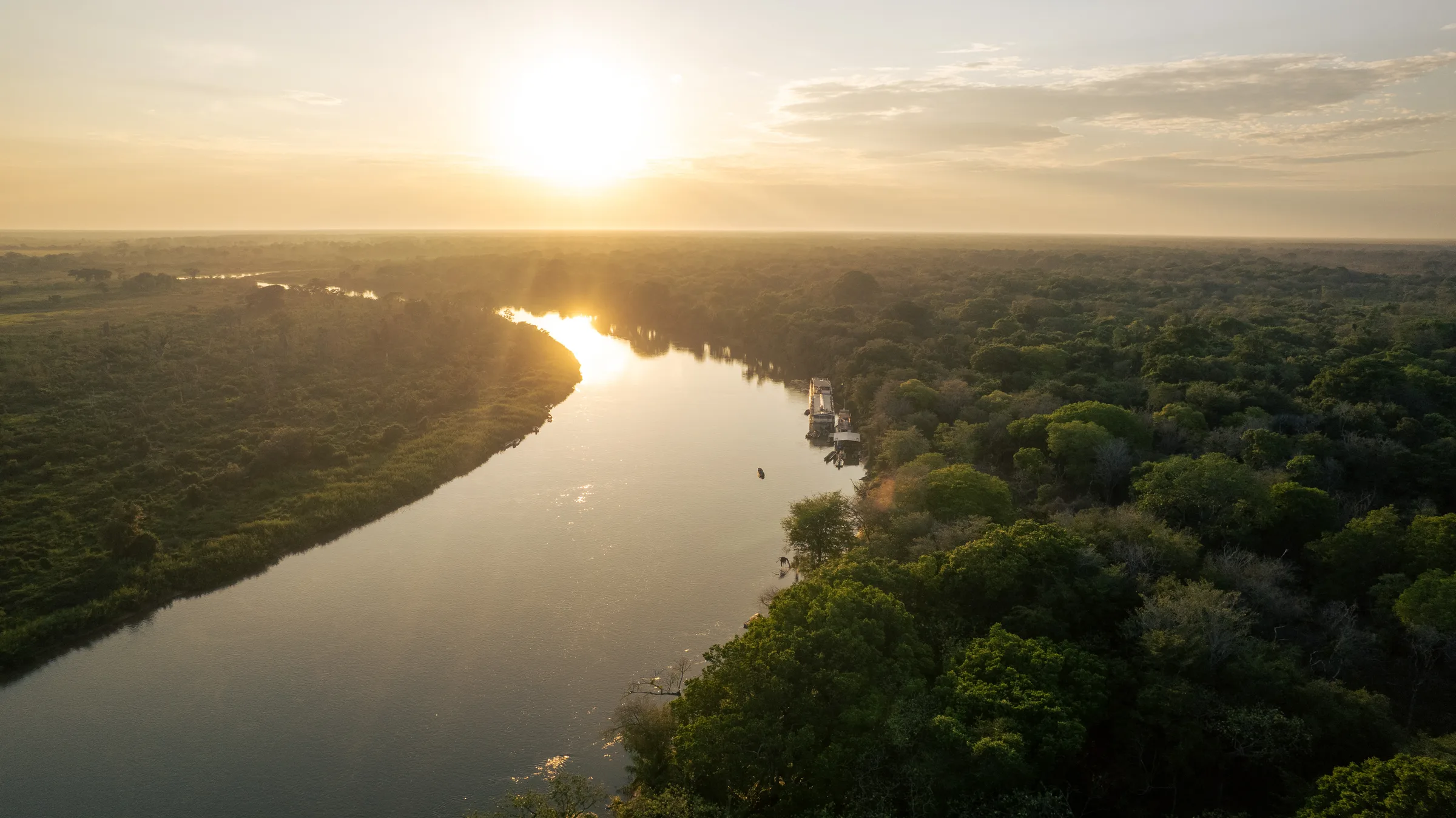
Some 150,000 km² that breathe with the water: they fill, they overflow, they dry out and they fill again. That pulse is what makes the Pantanal the most generous place on the continent to see wildlife up close.
An inland sea
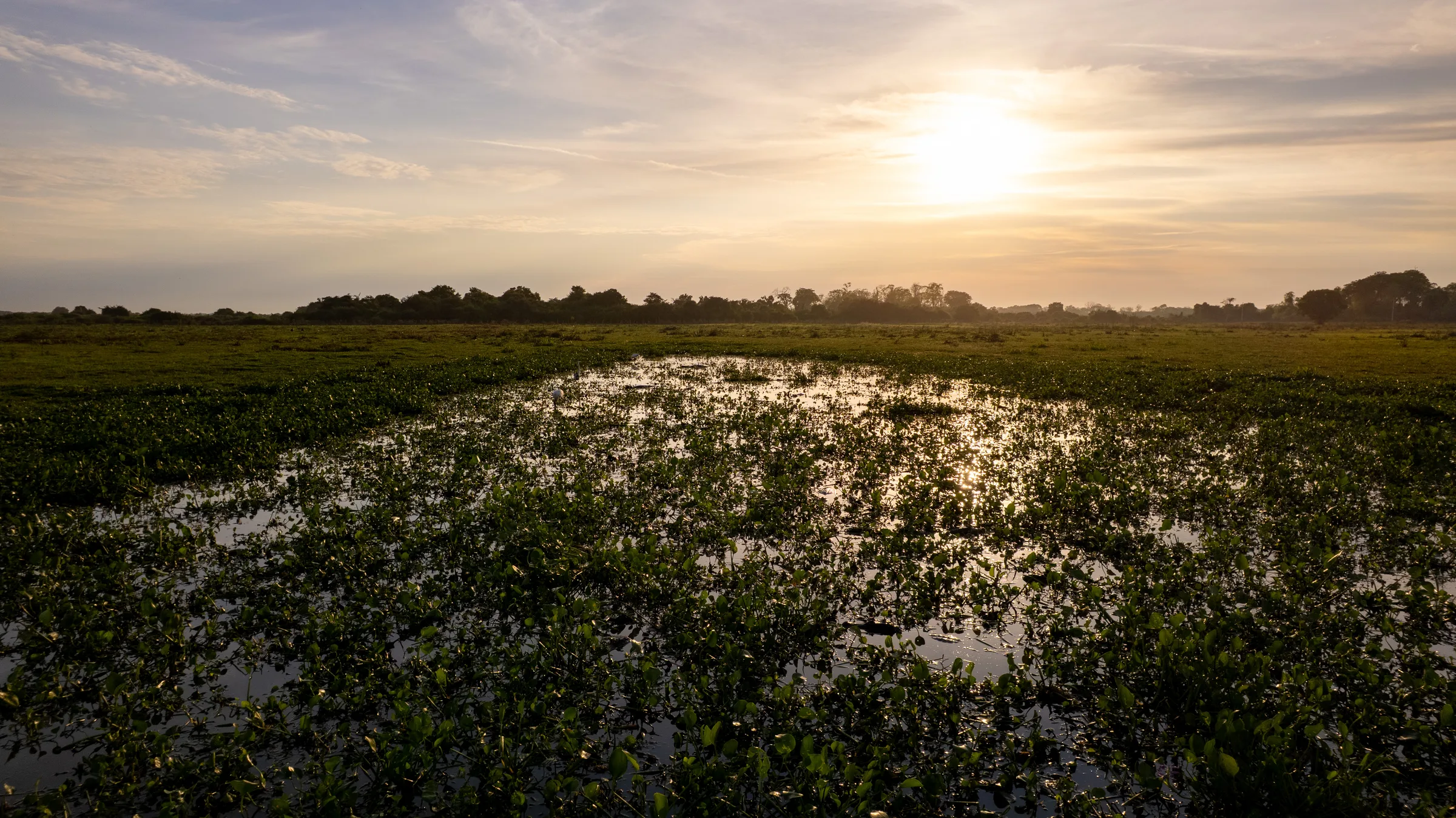
Set in the heart of South America, the Pantanal is a shallow basin that collects the rain falling on the highlands and gives it back slowly, over months. The water does not drain away: it spreads out, floods entire grasslands and reshapes the landscape four times a year.
That slowness is the secret of the biome. Nutrients stay put, fish multiply in the shallow bays, birds nest by the thousand and large mammals gather along the banks. Nowhere else in Brazil is wildlife this visible.
The jaguar
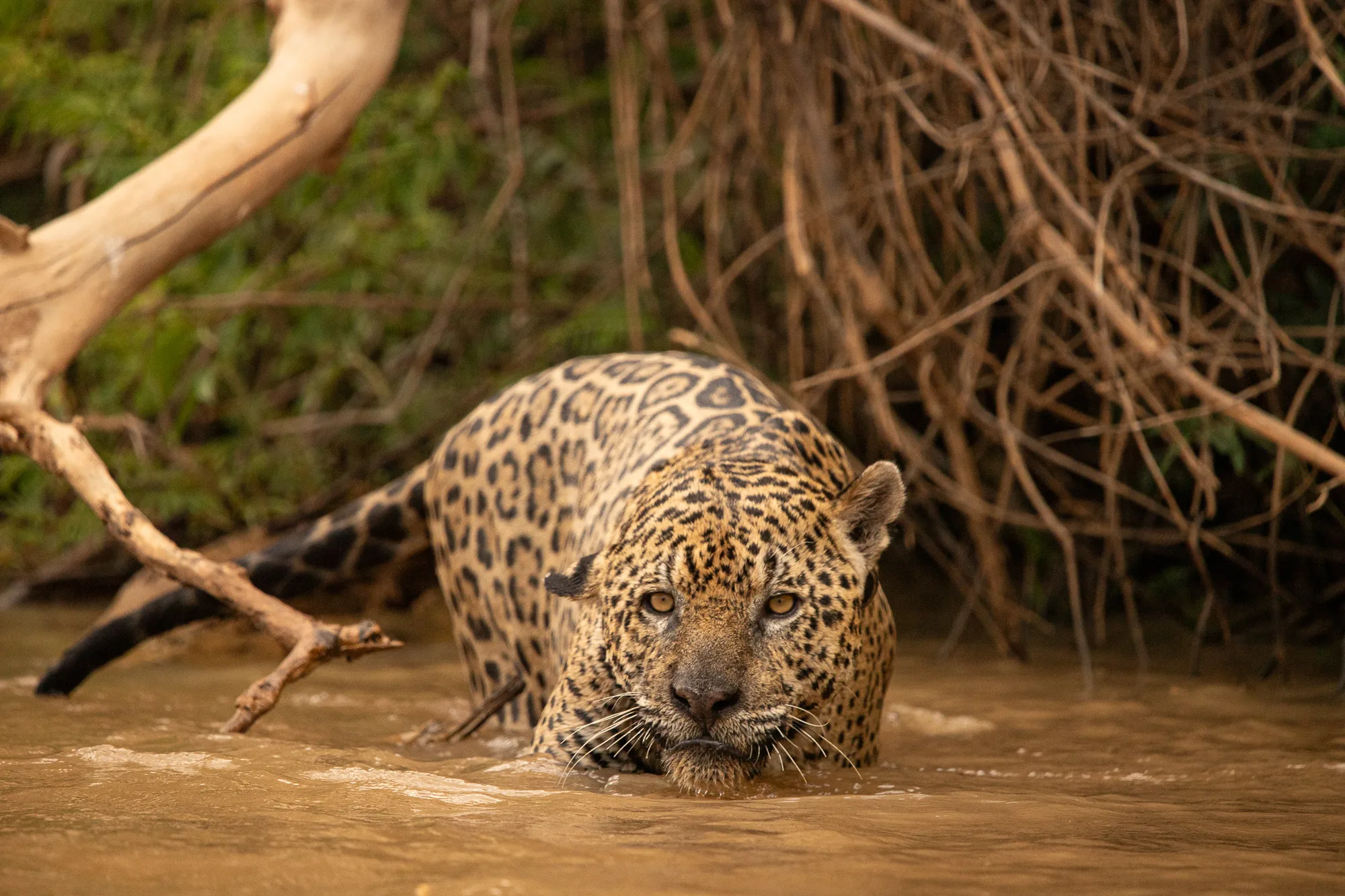
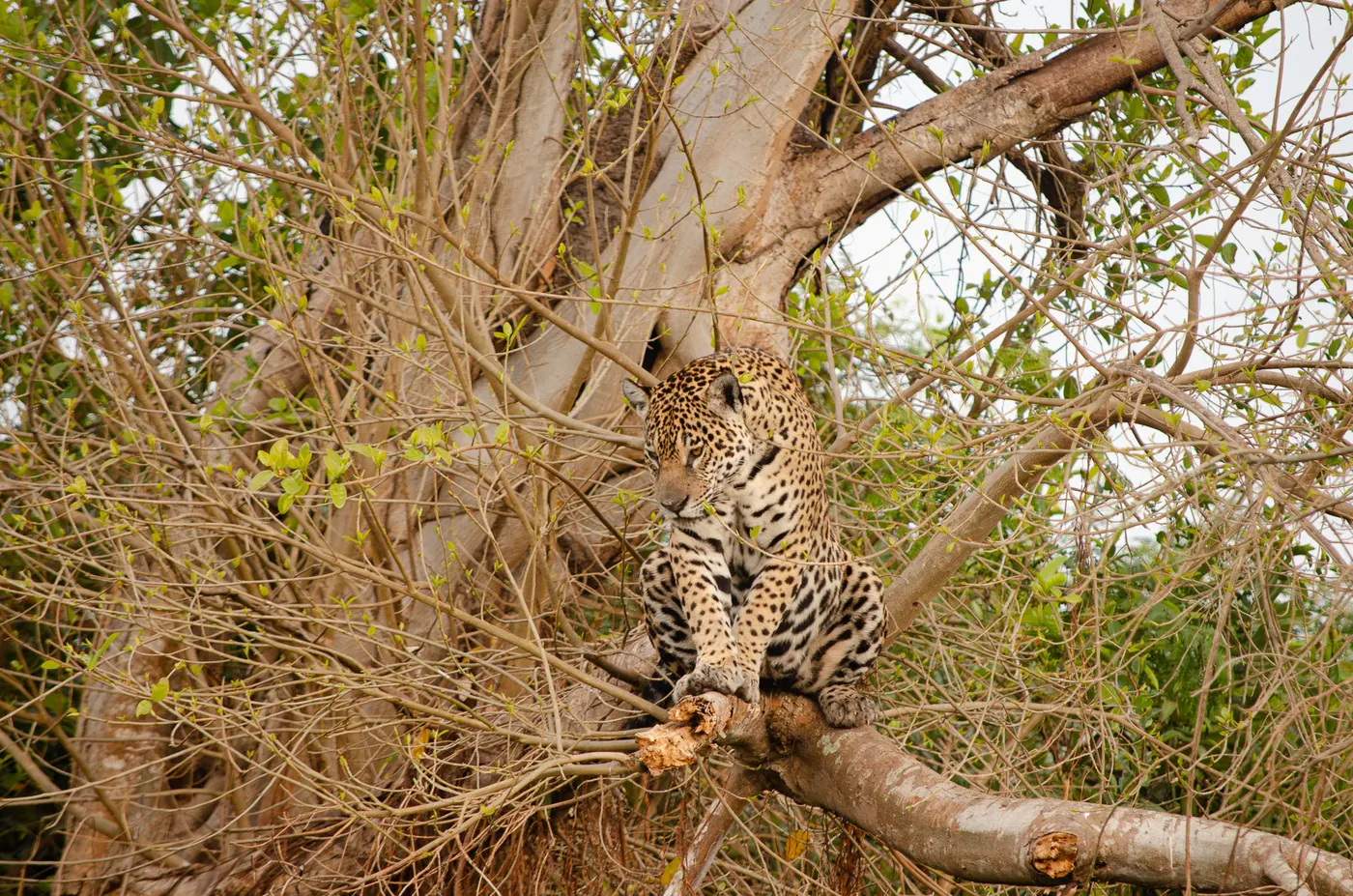
On the river banks around Porto Jofre, jaguars hunt capybara and caiman in broad daylight, and so let themselves be seen like nowhere else. Aboard the Transpantanal boats you meet them from the water, without ever cornering or chasing the animal.
The best window of the year for sightings, when the water drops and the jaguar comes down to the bank
The cycle of the waters
The biome has no summer and winter: it has flood, high water, ebb and dry. Each phase changes what you see, where you can navigate and what the river gives back. Reading that calendar is half the trip.
November to January
Rain from the highlands arrives, the river climbs and the plain begins to fill. The forest greens over and the birds start nesting.
February to April
The Pantanal turns into a shallow sea. Fish spread out across the flooded grasslands to feed, and almost the whole landscape can be navigated.
May to July
The water retreats and hands the fish back to the rivers and bays. This is the most generous stretch for sport fishing and for bird photography.
August to October
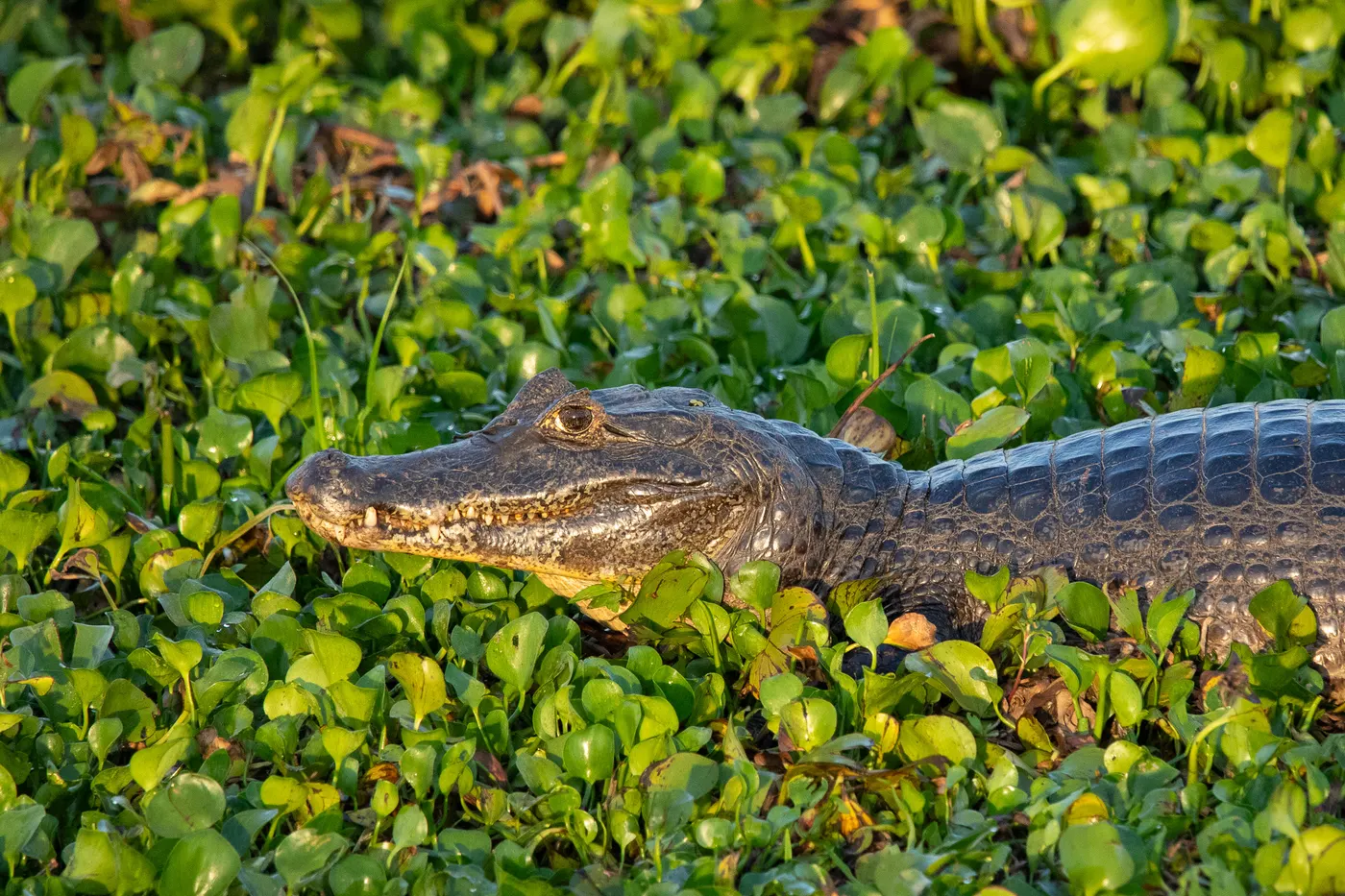
Life concentrates around whatever water is left. Caimans, capybaras, giant otters and jaguars pile up along the banks. It is the peak of ecotourism.
Outside that window the closed season applies: the fish run upriver to spawn and fishing is suspended by law. Ecotourism and wildlife watching carry on all year round.
Who lives here
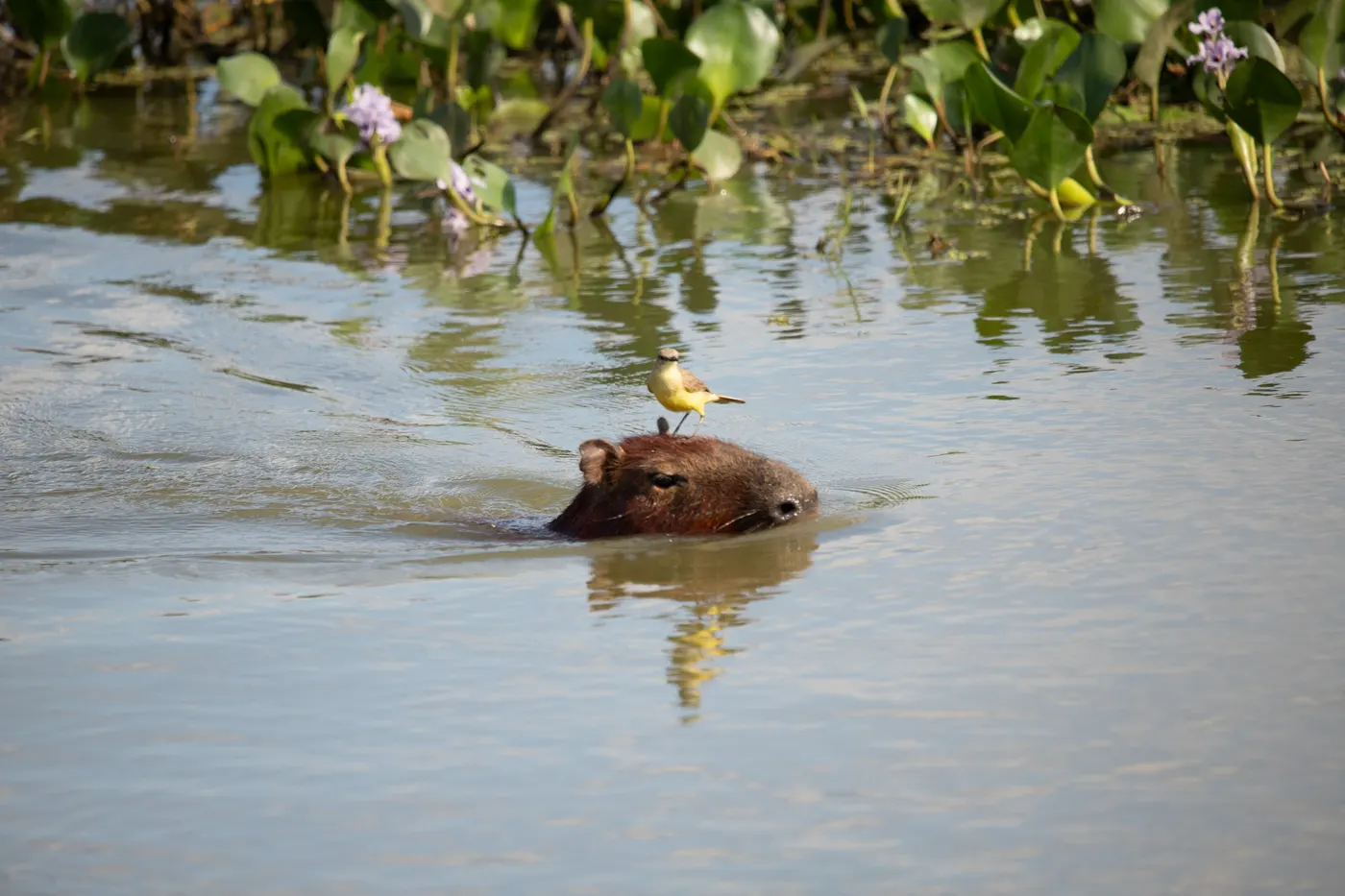
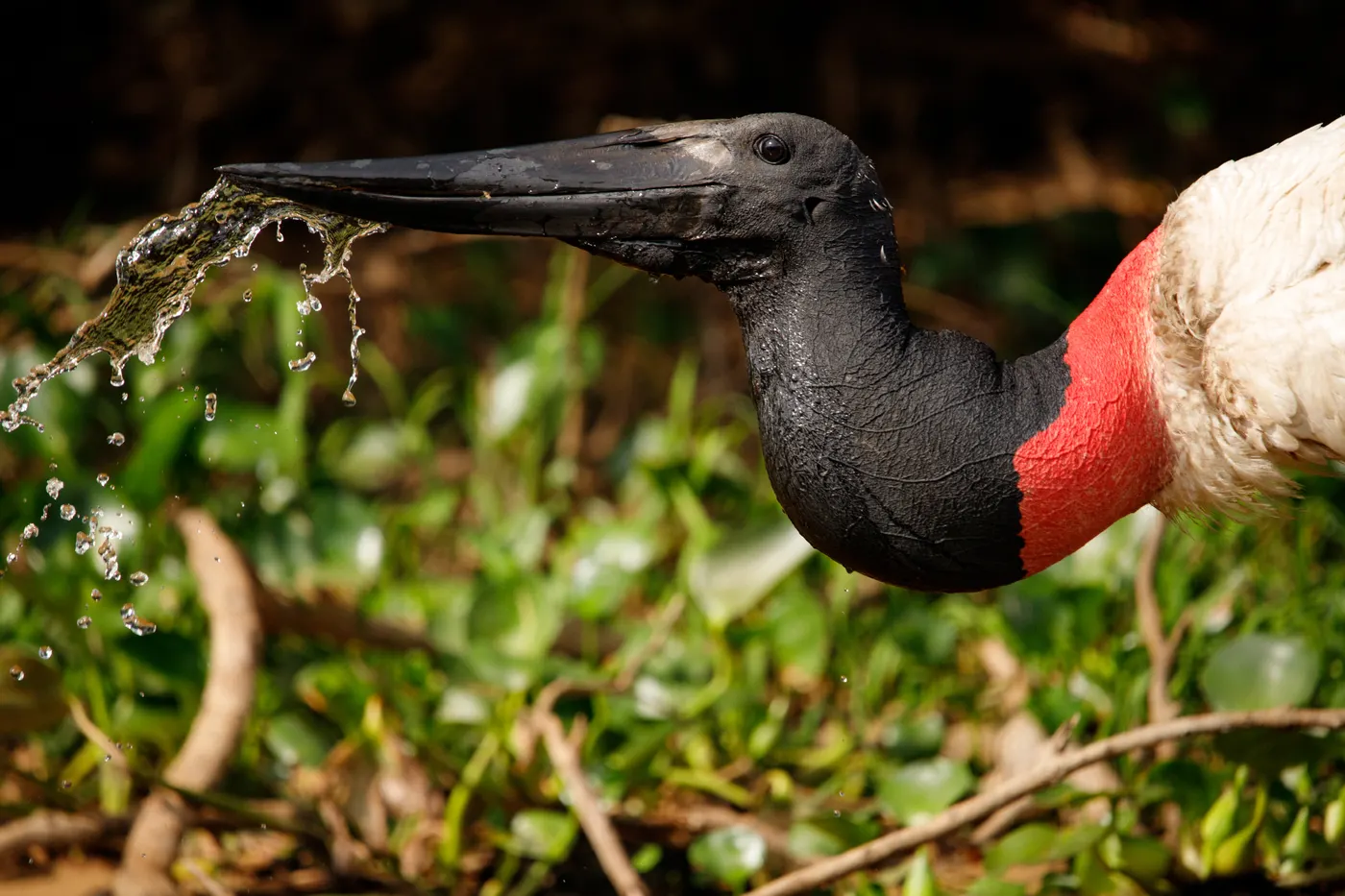
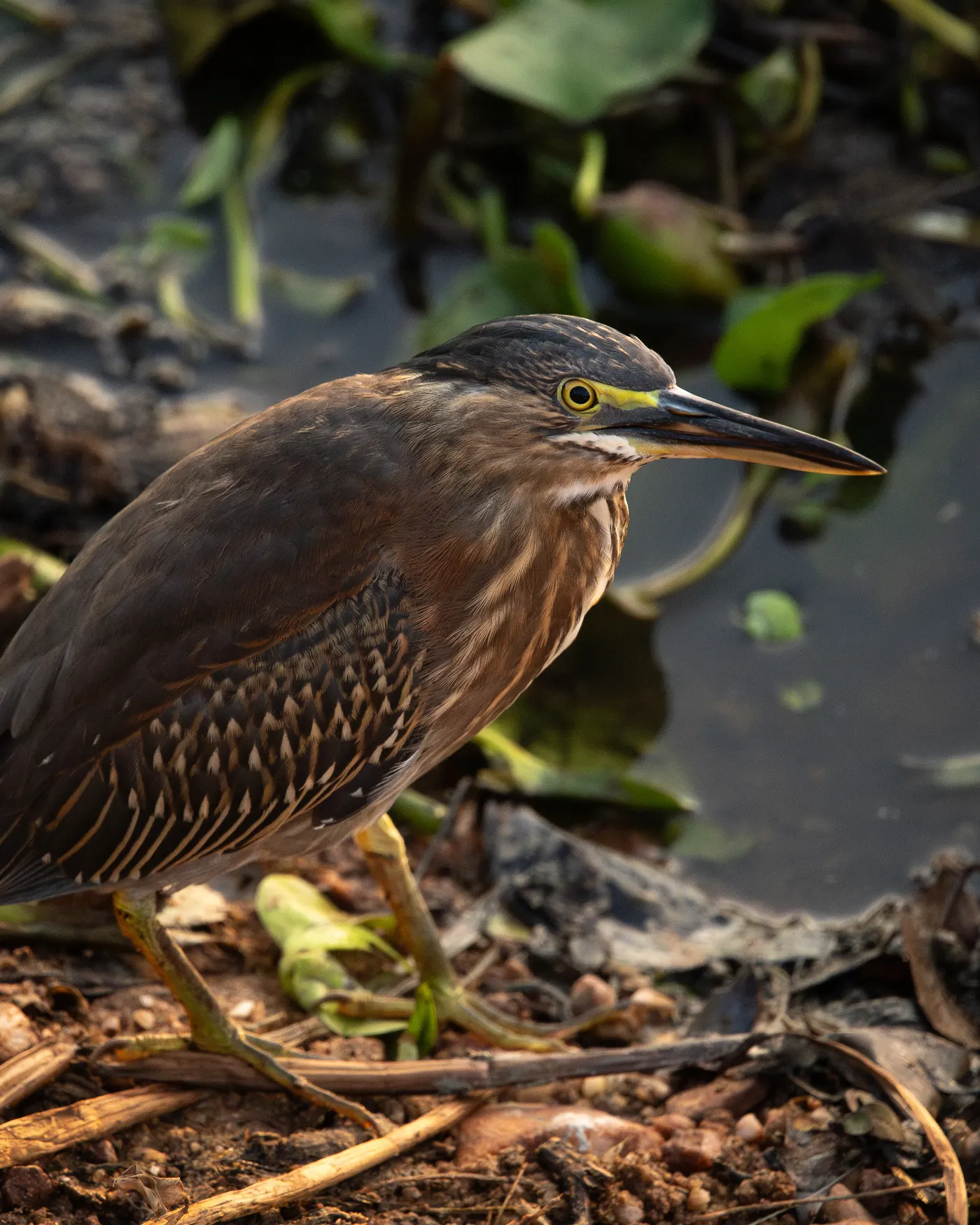
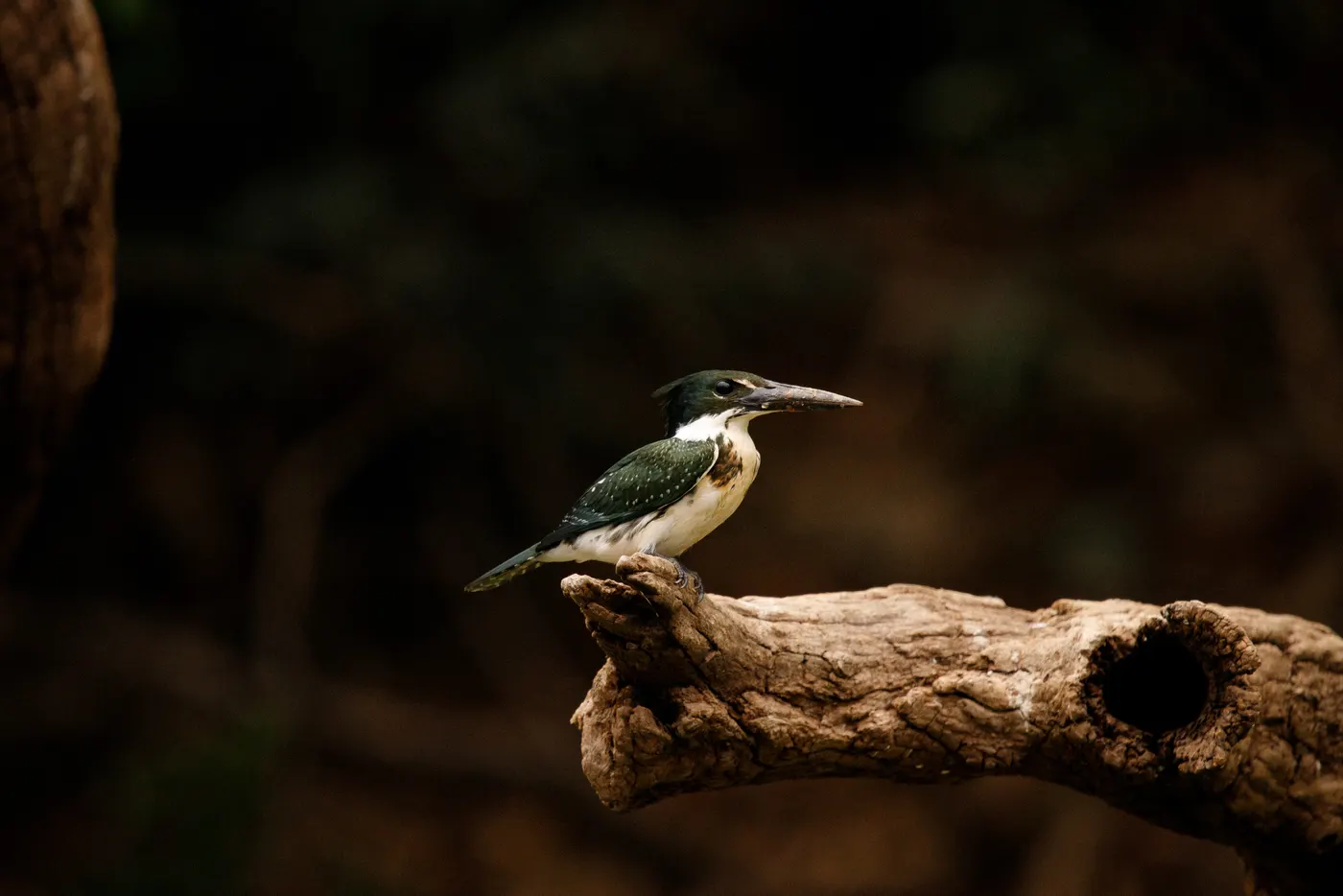
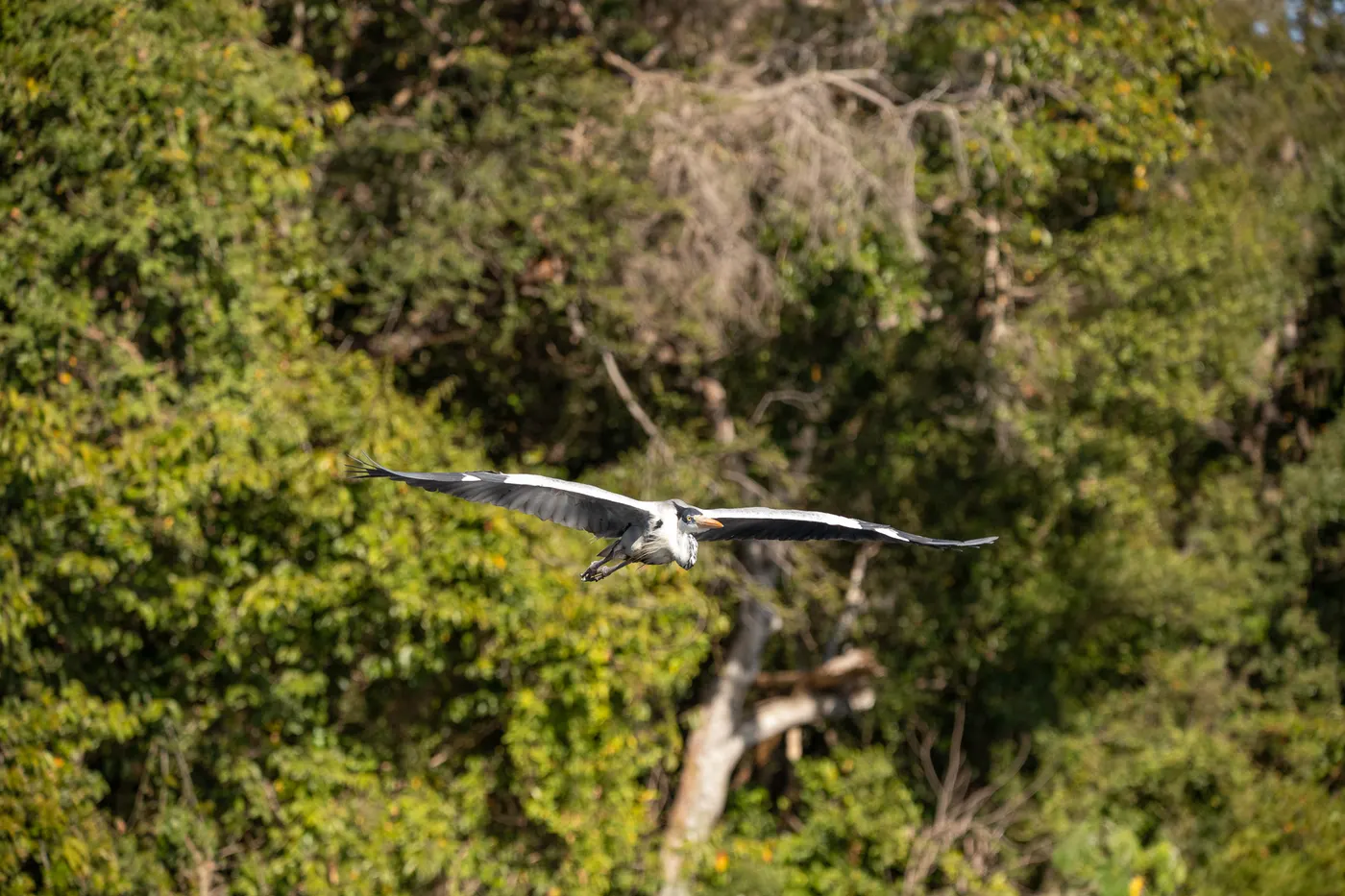
Jaguars, giant otters, caimans, capybaras and more than 650 bird species share the same banks. In the Pantanal the forest is open and the water is shallow. Wildlife has nowhere to hide, and that is what makes every outing memorable.
Northern Pantanal
The Northern Pantanal, in Mato Grosso, is the best preserved and most sought-after part of the biome. You reach it from Poconé, driving 150 km of dirt road along the Transpantaneira, a highway of more than a hundred wooden bridges suspended over the wetland. The drive is already a safari.
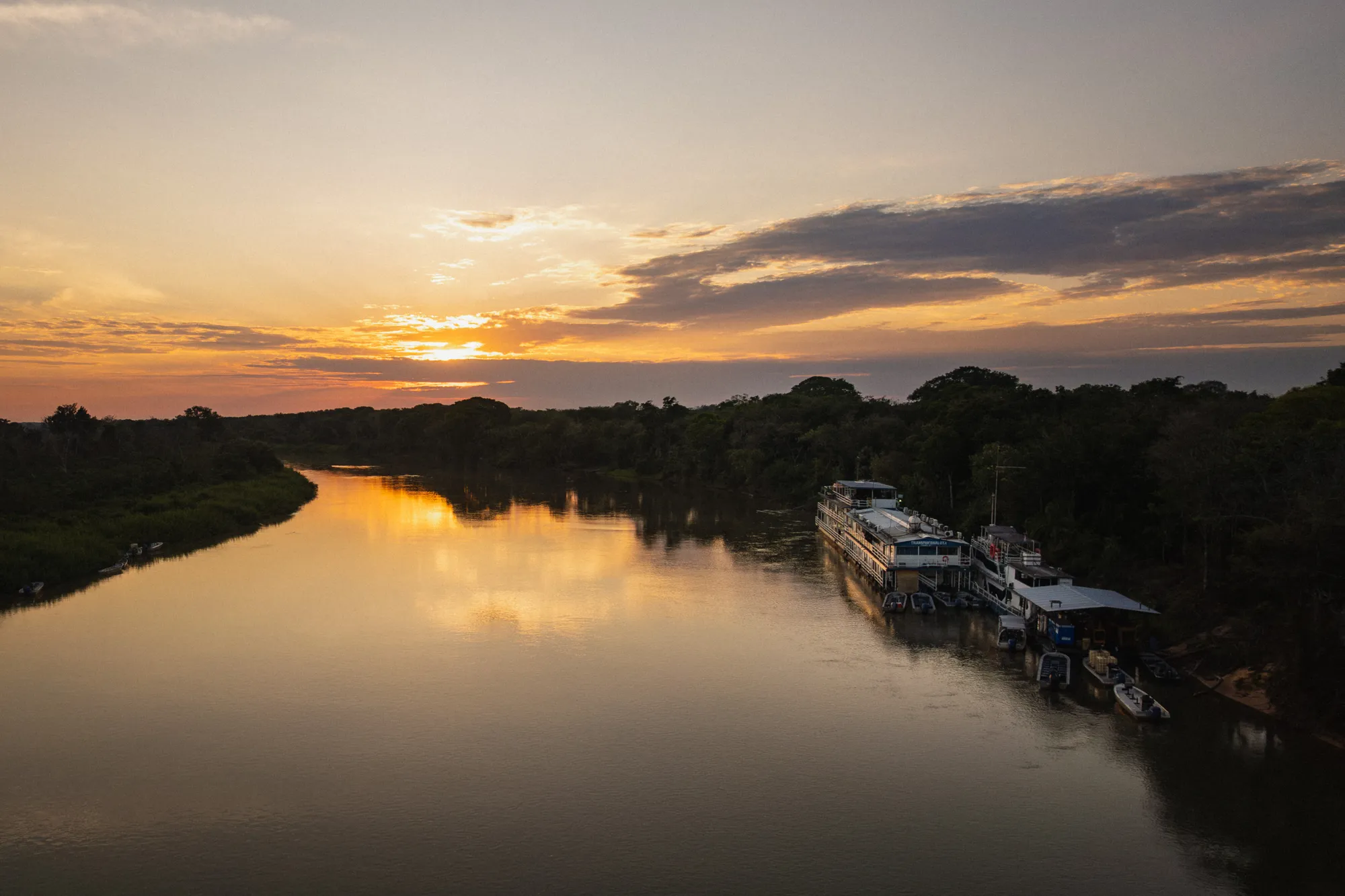
At the end of it lies Porto Jofre, where the Piquiri and São Lourenço rivers meet. That is where Transpantanal operates: our floating base is anchored at the confluence, and every outing leaves straight for the channels and bays.
Our floating base sits exactly where the wildlife gathers. Tell us when you plan to come and our team will build the itinerary with you on WhatsApp.